Optimizing your product pages is one of the most effective ways to boost sales and turn visitors into buyers. A well-optimized product page not only improves user experience but also increases your store’s visibility, conversions, and revenue. This Shopify product page optimization guide will walk you through proven strategies for improving product pages in 2026 — all tailored to help beginners make meaningful gains.
What Is Product Page Optimization?
Product page optimization refers to the process of improving various elements of your product detail pages (PDPs) to encourage visitors to make a purchase. These enhancements range from visual improvements to persuasive copy, trust elements, and technical adjustments, all designed to reduce friction and increase conversion rates.
Why Product Page Optimization Matters in 2026
Your product pages are the final stop in the visitor journey — the point where interest becomes revenue. The better your product page performs, the more likely visitors will complete a purchase. On average, a typical Shopify store converts around 1.4% to 1.8% of visitors, but top-performing stores consistently achieve 3% or higher by optimizing product pages effectively.
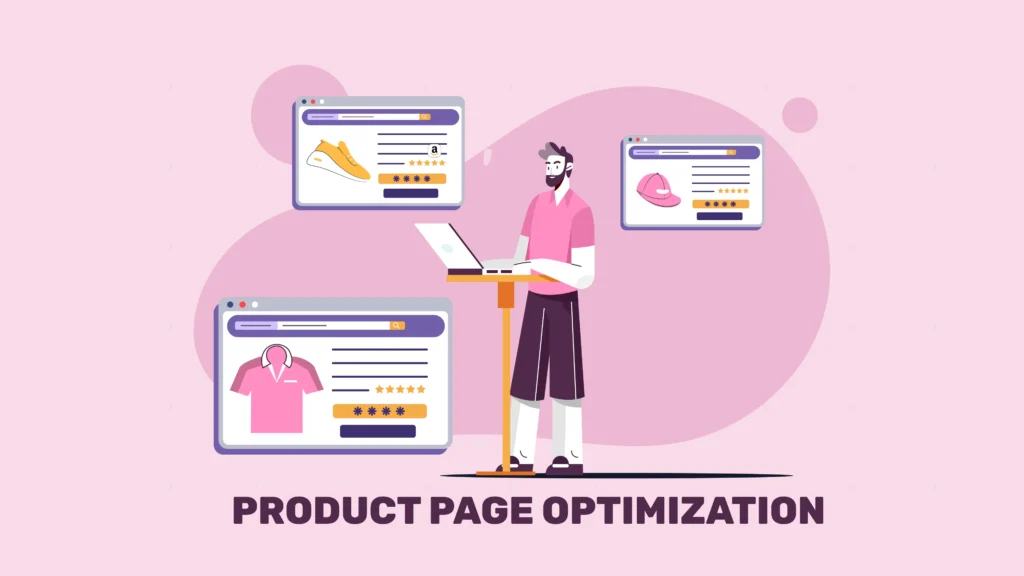
Key Elements of High-Converting Product Pages
Below are the essential components every optimized product page should include:
1. High-Quality Product Images
Images are the first thing visitors see, and they form the basis of shoppers’ perceptions. Use multiple high-resolution images showing the product from various angles — including lifestyle or real-use photos — to help customers visualize ownership.
Tips:
- Use at least 4–6 images
- Include zoom functionality
- Sync variant images (e.g., color/size) with user selection
2. Compelling Product Descriptions
Your descriptions should focus on benefits rather than just features. Explain why the product matters and how it solves a problem. Use bullets for scannability and include your main keyword naturally for SEO.
Structure Example:
- Brief opening summary (benefit-focused)
- Key features as bullets
- Technical/spec details (if required)
- Customer-centric closing
3. Clear and Strong Call-to-Action (CTA)
A strong CTA button like “Add to Cart” or “Buy Now” must be instantly visible and placed near the price and product title. This removes guesswork and makes conversion simpler.
Best Practices:
- Use contrasting button colors
- Keep the CTA text concise and directional
- Consider sticky buttons on long pages
4. Price, Shipping & Return Info Upfront
Unexpected shipping costs or confusing returns are common abandonment triggers. Clearly communicate:
- Shipping costs and time
- Return policies
- Guarantees and warranties
Transparency builds confidence and reduces hesitation.
5. Trust Signals and Social Proof
Social proof — like reviews and ratings — significantly influences buying decisions. Highlight real user testimonials and trust badges to reassure customers.
Examples:
- Star ratings near the product title
- Customer photos in galleries
- Trust badges for secure checkout
6. Mobile-Friendly Layout
Most Shopify store traffic in 2026 comes from mobile devices. Ensure your product pages are responsive, with readable fonts, tappable buttons, and fast load times.
7. Optimization for SEO
On-page SEO helps your product pages appear in search results. This includes:
- Descriptive meta title & description
- Keyword-optimized URL
- Unique alt text on product images
- Structured content with H2/H3 headings
This boosts both search visibility and click-through rate.
8. UX Enhancements and Navigation
A clean interface with intuitive navigation improves usability. Consider elements like:
- Breadcrumb trails
- Collapsible information tabs
- Recently viewed items
These reduce cognitive load and help decision-making.
Common Product Page Mistakes to Avoid
Even experienced store owners make these errors:
- Using only one product image
- Writing generic, non-descriptive copy
- Hiding trust elements below the fold
- Not detailing shipping/return info
- Ignoring mobile design flaws
Avoiding these mistakes improves clarity, legitimacy, and conversions.
Advanced Tactics (Next Level)
If you want to go beyond basics:
- Add product videos to show real usage
- Use 360° interactive visuals
- Run A/B tests for layout and copy changes
- Leverage urgency tactics like limited-time offers
These tactics deepen engagement and drive higher conversions.
Conclusion: Optimization Is Continuous
Product page optimization is not a one-time task. Start with the fundamentals above and continuously refine based on user behavior and analytics. A well-optimized product page can lift your conversion rate, increase revenue, and build stronger customer trust — making every visit more valuable.